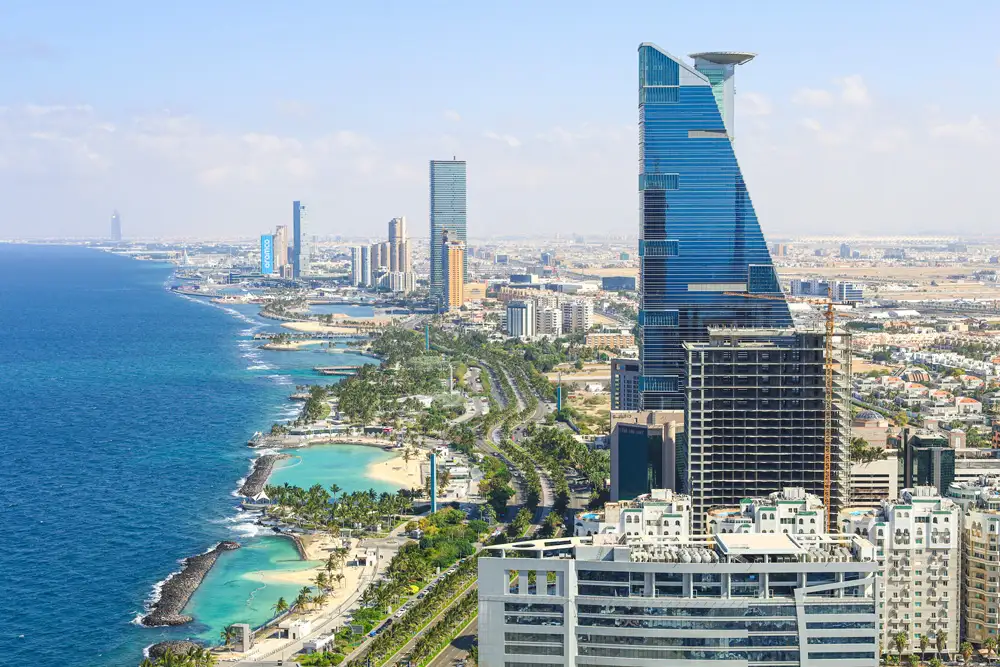
Compound vs Non-Compound Living in Saudi Arabia: The Real Cost & Lifestyle Math
A 3BR Riyadh compound villa rents at SAR 220,000. The same villa in Al Yasmin costs SAR 110,000. Here's the honest math on what each option buys — and who each one genuinely suits.
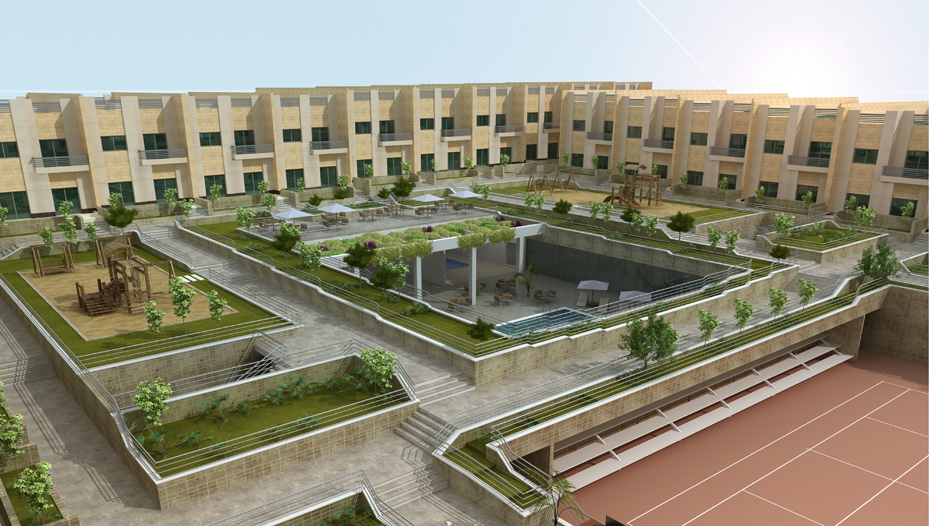
Two three-bedroom villas in north Riyadh. One inside a compound: SAR 220,000 a year, with the security gate, swimming pool, fitness centre, padel courts, kids’ clubs, and ready-made neighbour network that come with the gate. One in Al Yasmin: SAR 110,000 a year, with the space and independence that an open-street villa offers. Both are real listings. Both are popular. Both fill up fast each renewal cycle. The question this guide answers is which package fits your household — and what the honest math looks like once you put the two side by side.
The broader market context. JLL’s MENA residential outlook places average Riyadh villa rents at SAR 88,715 in 2025, up 17.2% year-on-year. Knight Frank’s Saudi Report 2025 puts northern Riyadh villa pricing at SAR 8,660 per square metre, growing 8.2% annually. Compound villas, with their bundled services and managed-community living, sit at the premium end of that spectrum and remain a top choice for Saudi families and expat households alike. Vision 2030’s investment in residential neighbourhoods across the capital has also strengthened the offering outside the gate — which means the decision in 2026 is between two genuinely strong propositions, not between a default and an alternative.
Here is what each option offers, what it costs, and how to match the choice to your household.
The Headline Price Gap
Start with the obvious. A three-bedroom villa inside a mid-to-upper-tier Riyadh compound — Cordoba Oasis, Al Hamra Oasis, the Saudi German compound, or the cluster of properties near the Diplomatic Quarter — typically rents in the SAR 180,000–280,000 per year range. The same three-bedroom villa in Al Yasmin, Al Olaya, Al Malqa, or Al Narjis, outside any compound wall, can be secured for SAR 90,000–160,000 according to Bayut’s 2025 Riyadh rental data.
| Property Type | Compound (Riyadh) | Non-Compound (Riyadh) | Premium |
|---|---|---|---|
| 1BR Apartment | SAR 60,000–100,000 | SAR 30,000–55,000 | ~80% |
| 2BR Apartment | SAR 90,000–150,000 | SAR 50,000–80,000 | ~70% |
| 3BR Villa | SAR 180,000–280,000 | SAR 90,000–160,000 | ~60–75% |
| 4–5BR Villa | SAR 250,000–500,000+ | SAR 130,000–220,000 | ~80–100% |
Indicative ranges derived from Bayut, Aqar, and Knight Frank Q2 2025 listings.
The premium is rarely below 20%. In the tightest segment — large family villas in north Riyadh — it can exceed 100%. A common pattern in 2025: identical floor plans, identical finish levels, separated by 600 metres of road and a security gate, with one priced at SAR 220,000 and the other at SAR 110,000.
The Hidden Cost Layer
Sticker rent is only the start. Compounds bundle a cost stack that non-compound tenants usually don’t pay, or pay only partially. Industry estimates from Cushman & Wakefield’s KSA residential briefings and on-the-ground broker data suggest the following typical annual additions for a family of four in a Riyadh compound:
| Cost Item | Compound (annual) | Non-Compound (annual) |
|---|---|---|
| HOA / amenity fee | SAR 8,000–25,000 | SAR 0 |
| Vehicle pass (2 cars) | SAR 1,500–4,000 | SAR 0 |
| Guest registration / events | SAR 500–2,000 | SAR 0 |
| Internet (premium compound package) | SAR 4,800–7,200 | SAR 2,400–4,800 |
| Electricity (larger villa, AC) | SAR 9,000–14,000 | SAR 6,000–10,000 |
| Water | SAR 1,200–2,400 | SAR 800–1,800 |
| Hidden cost stack | SAR 25,000–55,000 | SAR 9,200–16,600 |
Layered onto the rent premium, the true gap between compound and non-compound living in Riyadh frequently sits at SAR 100,000–180,000 per year for an equivalent family setup. That is a luxury vehicle every two years, or a private-school tuition slot, or — for many — the entire difference between saving and not saving.
What the Premium Actually Buys
In fairness, the bundle is real. Compounds in Saudi Arabia deliver a level of self-contained convenience that the open neighbourhood, however leafy, simply cannot replicate:
- Amenities on tap: swimming pools (often segregated by hours), gyms, tennis and padel courts, a small supermarket, sometimes a clinic or a primary school
- Security: double-gated entry, 24/7 guards, vehicle scanning, controlled guest access
- Community programming: kids’ clubs, women’s fitness classes, festive events — particularly valued by trailing-spouse expats
- Predictability: standardised maintenance, English-speaking management offices, faster fault resolution
- Community programming and lifestyle services: historically a strong draw — though with Vision 2030’s investment in fitness clubs, cafés, family entertainment districts, and mixed-use developments across nearly every Riyadh neighbourhood, many of these features are now equally available outside the gate
That last bullet is the one to watch. A meaningful share of the compound’s historic appeal came from the lifestyle bundle inside the wall, but Saudi Arabia’s broader residential transformation has reshaped the landscape considerably. The General Authority for Statistics (GASTAT) reports steady investment in entertainment and lifestyle infrastructure across the country, and Vision 2030 has put cafés, concerts, cinemas, and gyms within easy reach of nearly every Riyadh neighbourhood. What were once compound-exclusive features are now everyday parts of life across the capital — which means the premium increasingly buys convenience and community, not exclusivity.
The Security Premium — Is It Justified?
Saudi Arabia is one of the safest countries in the world. Numbeo’s 2025 crime indices and the Kingdom’s own GASTAT data both place violent crime at exceptionally low levels — comparable to Japan or Switzerland on most measures. Petty theft exists, particularly in dense urban districts, but the baseline risk in Al Malqa, Al Yasmin, or Al Olaya is already vanishingly small.
Translated bluntly: residents pay a substantial premium for compound-level security in a country where the marginal security benefit of a gate is, statistically, very modest. The premium is genuine for perceived safety, for predictable access control, and for parents who want children to cycle the streets unsupervised. As an actuarial calculation, however, the gate’s incremental protection is thin.
Lifestyle Trade-offs Beyond the Money
Money aside, the choice reshapes daily life. Five trade-offs matter most.
1. Commute. Most premium Riyadh compounds sit on the city’s northern arc — north of King Fahd Road, east of the airport corridor. If the office is in KAFD, the Diplomatic Quarter, or Al Olaya, that geography works. If it is in Al Malaz, Al Naseem, or the southern industrial districts, a compound commute can become a 90-minute daily tax. The Riyadh Metro, launched late 2024, helps, but station coverage favours non-compound neighbourhoods.
2. School proximity. International schools — the British International School Riyadh, the American International, Multinational, KAUST schools in the eastern compounds — cluster near major compounds, which is genuine convenience. National and bilingual schools, by contrast, are distributed throughout regular districts.
3. Privacy. Compounds offer a strange inversion: high security, low privacy. Neighbours notice everything. Non-compound villas with proper walls offer a level of household privacy that’s hard to replicate in a tight-knit gated community.
4. Cultural integration. This is the quiet one. Living in a compound in 2026 means largely socialising with other expats and Western-oriented Saudis. Living in Al Malqa or Al Yasmin means waking up to the call to prayer next door, knowing the local baqala owner, and meaningfully engaging with the country you’ve chosen. For some, this is the point of being here. For others, it is precisely what they want to insulate against.
5. Flexibility. Compound leasing offices tend to operate on rails: annual cheque, signed before move-in, negotiate at your own risk. Outside the gate, particularly in 2025’s cooler transactional climate, individual landlords are noticeably more receptive to splitting the payment timeline. Monthly-payment rails (Ejari among them) work in both settings, but owner-managed villas in the open neighbourhoods have been quicker on the uptake than the compound operators.
What the Premium Earns Back: A Break-Even Lens
The cleanest way to think about the premium is to ask: what would I spend on these amenities if I bought them independently?
| Amenity | Standalone Annual Cost (Riyadh) |
|---|---|
| Gym membership (premium, family of 3) | SAR 9,000–14,000 |
| Private pool club access | SAR 6,000–12,000 |
| Padel / tennis (regular play) | SAR 4,000–7,000 |
| Kids’ activities and clubs | SAR 6,000–15,000 |
| Private 24/7 security (residential villa) | SAR 30,000–48,000 |
| Total standalone equivalent | SAR 55,000–96,000 |
If a family uses all of these — and many compound families do — the premium roughly breaks even, sometimes favourably. If a family uses two or three of the amenities, the math is less aligned, with the household effectively paying for facilities it doesn’t fully draw on. The break-even is real but conditional. The honest question for any family is not “is the compound worth it?” but “do we actually use what it offers?” For households that swim daily, play padel weekly, send kids to compound clubs, and value managed security, the answer is often a clear yes.
Who Each Option Genuinely Suits
After stripping out the romance, the segments sort cleanly.
- Compound makes sense for: families with young children needing safe, supervised play space; trailing spouses without local language access; short-tenure expats (under three years) prioritising convenience over savings; senior executives whose employer pays a housing allowance large enough to absorb the premium; households that will heavily use pools, gyms, and clubs.
- Non-compound makes sense for: Saudi families and long-tenure expats; singles and couples without children; anyone whose office is south or central; cost-sensitive professionals saving toward homeownership; tenants who value privacy, space, and cultural integration over bundled amenities.
The hardest segment is the middle: dual-income expat families with school-age children on five-year postings. For them, the calculation depends almost entirely on how much the employer subsidises housing and how the family actually spends weekends.
Vision 2030 and the Compound’s Changing Demographic
Compound living was historically about 80% expat. That ratio is shifting. The General Authority for Real Estate (REGA) and Ministry of Municipal and Rural Affairs and Housing report that Saudi homeownership has climbed from 47% in 2016 to roughly 65.4% by late 2024, with the Vision 2030 target of 70% within reach. As more Saudi families own villas, more Saudis are also choosing premium gated communities — for the same amenity and security stack expats have valued for years.
The cultural texture of compounds is changing in parallel. Many newer developments — particularly in Al Malqa and northern Riyadh — market themselves to a blended Saudi-expat audience, with mosques inside the gates, halal-only F&B options, and family programming that reflects local norms. The “Western compound” of 2010 is increasingly an artefact. The 2026 version is something else: a premium urban product for whoever can afford it.
Inside the Gate vs Outside the Gate — at a Glance
- Compound rent in Riyadh runs 60–100% above equivalent non-compound housing; for a 3BR villa, expect SAR 180,000–280,000 vs SAR 90,000–160,000
- Hidden costs (HOA, vehicle passes, premium internet, larger utility bills) add SAR 25,000–55,000 per year inside the gate
- The standalone cost of replicating compound amenities is roughly SAR 55,000–96,000 per year — so the maths only works if the family actually uses what’s on offer
- Saudi Arabia’s already low crime rate makes the security premium more about perception than statistical risk reduction
- Lifestyle amenities once exclusive to compounds — cafés, fitness clubs, family entertainment, mixed-use developments — are now woven into neighbourhoods across the capital thanks to Vision 2030’s investment programmes
- Vision 2030’s homeownership push (47% → 65.4% and climbing) is rapidly Saudising the compound resident base
- The honest decision rests on commute, family stage, and amenity use — not on the legacy expat default
Frequently Asked Questions
Is compound living still required for expats in Saudi Arabia? No. There is no legal requirement for expats to live in compounds. Non-compound rentals are available to all residents holding valid Iqama, and the practical case for compound-only living is now a matter of personal preference around amenities and community, with both options widely accessible.
How much more does a Riyadh compound villa cost vs an equivalent non-compound villa? Typically 60–100% more in headline rent, plus an additional SAR 25,000–55,000 per year in HOA fees, premium utilities, and access charges. For a three-bedroom family setup, the all-in gap is usually SAR 100,000–180,000 annually.
Are compounds safer than regular Saudi neighbourhoods? Marginally, on perception; negligibly, on data. Saudi Arabia has one of the lowest violent crime rates globally according to Numbeo and GASTAT figures, so the incremental security benefit of compound gates is real but small.
Which Riyadh districts are best for non-compound family living? Al Yasmin, Al Malqa, Al Narjis, Hittin, and parts of Al Olaya offer modern villas, good schools nearby, and easier metro access than most compounds. Diplomatic Quarter residents form a separate category — neither traditional compound nor open neighbourhood.
Can I pay compound rent monthly instead of a year upfront? Traditionally, no — landlords and compound operators demand one or two annual payments. REGA-licensed platforms now enable monthly rent payments while the landlord still receives the full year upfront, which is reshaping how both compound and non-compound leases get financed.
Will compound rents fall after the September 2025 rent-freeze policy? Unlikely to fall, but unlikely to rise further inside Riyadh’s urban boundary for five years from September 2025. Most analysts (Knight Frank, JLL) expect a stabilisation rather than a correction.
Whether the answer is a compound villa off King Fahd Road or an open-street home in Al Malqa, the cheque you write on signing day shapes the decision almost as much as the address does. Here’s the good news: with Ejari, you can now pay for your compound monthly. We’re a REGA-licensed platform, and we partner with many of the Kingdom’s leading compounds — handing the landlord or compound operator the full year on signing, while you pay us in twelve monthly instalments. The annual lump-sum is no longer the gatekeeper to the property you actually want. See how it works at ejari.sa.